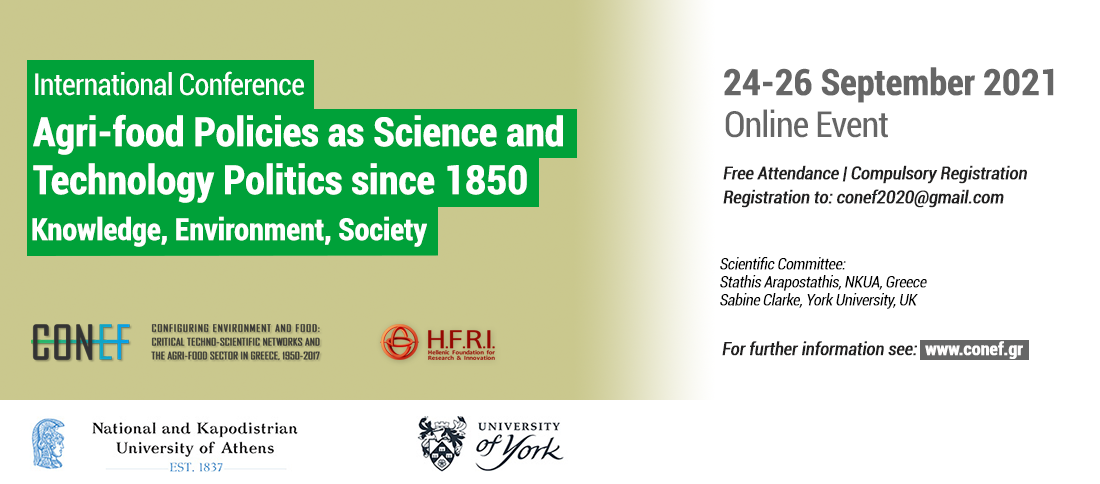
Invited talk as part of SPRU’s ‘Science Politics and Decision Making’ research mobilisation sessions @ Tuesday 30th of May, 12:30-13:30 (GMT+1)


Invited talk as part of SPRU’s ‘Science Politics and Decision Making’ research mobilisation sessions @ Tuesday 30th of May, 12:30-13:30 (GMT+1)

MEAT meets Stathis Arapostathis – March 22, 2023, 2.30-4pm CET
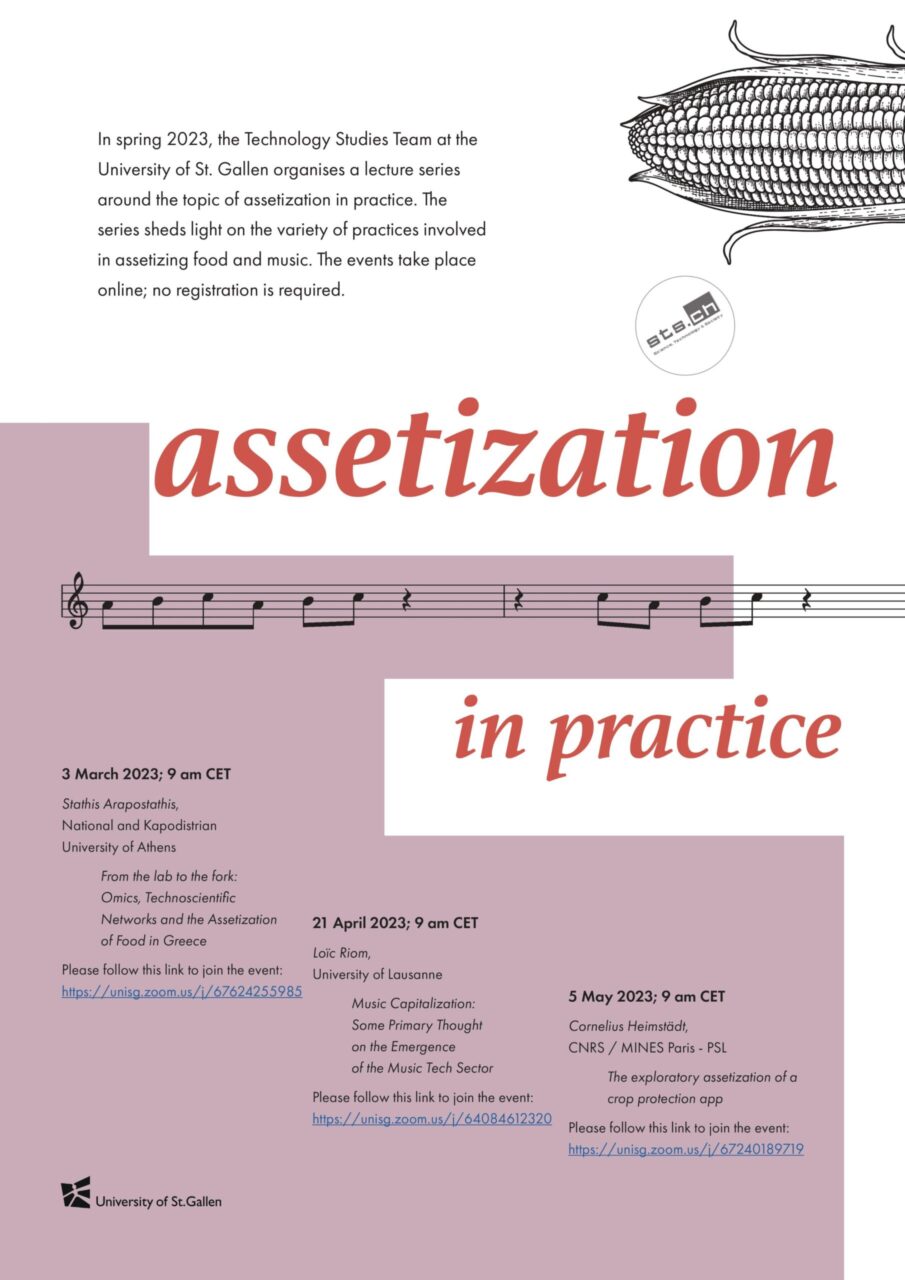
Stathis Arapostathis online lecture on ‘From the lab to the fork: Omics, Technoscientific Networks and the Assetization of Food in Greece’, on Friday, 3 March, at 9:00 CET
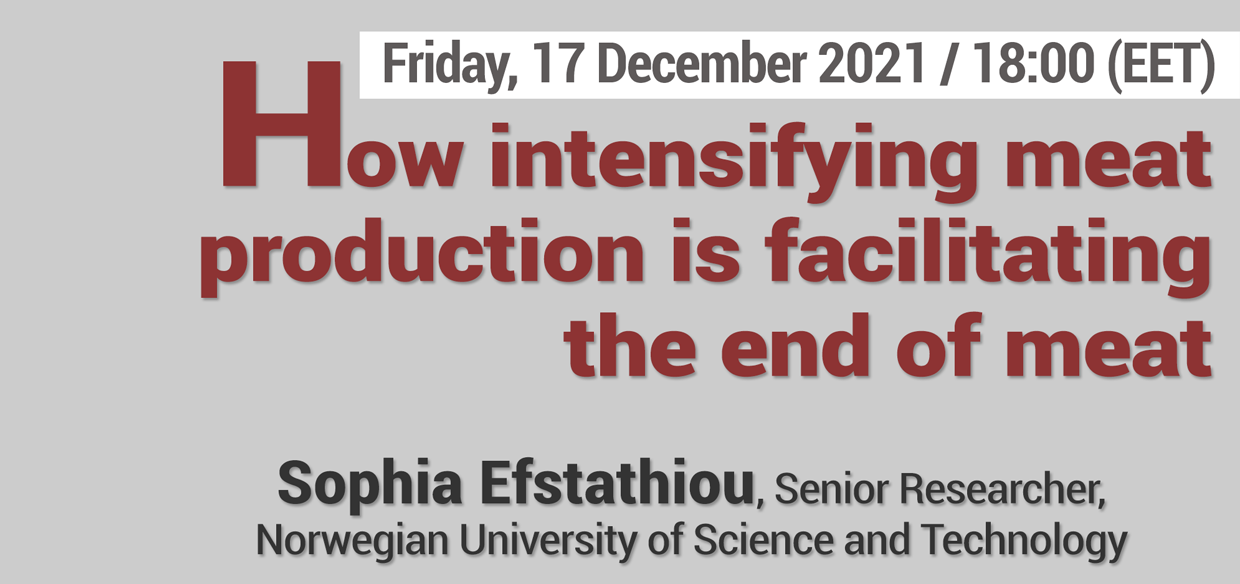
Our guest speaker, Sophia Efstathiou, is a Researcher at the Norwegian University of Science and Technology, Trondheim. Her work spans the history and philosophy of science and medicine, ethics of
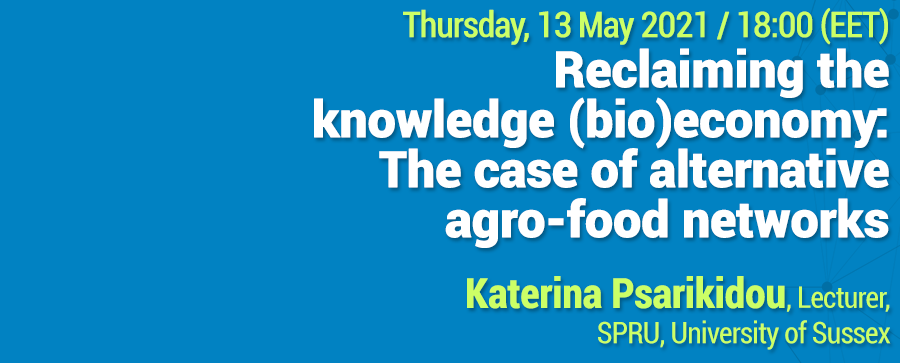
Thursday, 13 May 2021 / 18:00 (EET) “Reclaiming the knowledge (bio)economy: the case of alternative agrofood networks” Katerina Psarikidou, Lecturer, SPRU, University of Sussex Webinar series: Sustainability, Techno-sciences,
Thursday, 18 March 2021 / 18:00 (EET) “Difficult Chemicals: Understanding the slow uptake of insecticides in British Farming after 1945” Sabine Clarke, Senior Lecturer, Department of History, York University, UK
Thursday, 11 February 2021 / 18:00 (EET) “From food security to sustainable agriculture and fair-trade, two centuries of sustainability challenges in agriculture and food in The Netherlands (1820-2020)” Frank Veraart,
Thursday, 14 January 2021 / 18:00 (EET) “The ‘new’ financialization of food” Tanja Schneider, Associate Professor, St Galen University, Switzerland Webinar series: Sustainability, Techno-sciences, Transitions:

Thursday, 10 December 2020 / 18:00 (EET) “What if everything was edible?” Danielle Wilde, Associate Professor, University of Southern Denmark Webinar series: Sustainability, Techno-sciences, Transitions: From history to contemporary
Thursday, 12 November 2020 / 18:00 (EET) “Constructing a different ‘normal’ beyond agri-modernisation: Brazil’s solidaristic agri-food initiatives respond to the Covid-19 crisis” Les Levidow, Senior Research Fellow, Open University, UK
 Recent studies in the fields of energy and environment studies and Science, Technology and Society (STS) studies have emphasized the analysis of the agri-food sector and food chain in relation to their role in shaping energy consumption, water management and environmental impact. The environment is understood as a material constitution of animal and plant organisms, which is often impacted by particular infrastructures, practices and policies. The intensification of the production and use of new innovations and technologies in producing animal and plant organisms has further increased the burden on the environment and raised the level of greenhouse gas emissions. Industrial-scale agriculture and the science-based agri-food sector are characterized by intensive energy and water consumption. Agriculture and the agri-food sector contribute substantially to greenhouse gas emissions and pollutants. The harmful effects on the environment from the green revolution of the 1960s and 1970s, and the subsequent paradigm with the emphasis on science-based, intensive and industrialized agriculture, have been stressed and pointed out by agronomists, social scientists and actors from civil society. Environment-shaping activities exist at each step of the food chain (i.e. production, processing and consumption) and the establishment of sustainability in the agri-food sector is a major societal challenge waiting to be tackled. We have identified that in modern societies there has been an analytical and epistemological fragmentation of the modes of production and the modes of consumption through the medicalization of the discourse about the diet. The gap between the modes of production and those of consumption in terms of public and scientific discourses are present both in the countries of the Global North and the Global South in different and distinct ways in each case. Food and agriculture are facing an increasing number of “grand challenges”: climate change, energy and water resource depletion, emerging diseases and antimicrobial resistance. They increase the uncertainty about the future development of agriculture, making it difficult to see how the increasing demand for food and other bio-based materials can be met in a sustainable way.
See more about the project ⇀